
Yiruida news
White Foam Board Frames: A Buyer's Guide to Selection and Verification
How to specify white foam board frames for protective packaging, what to verify in samples, and which supplier questions separate a workable frame from a costly misfit.
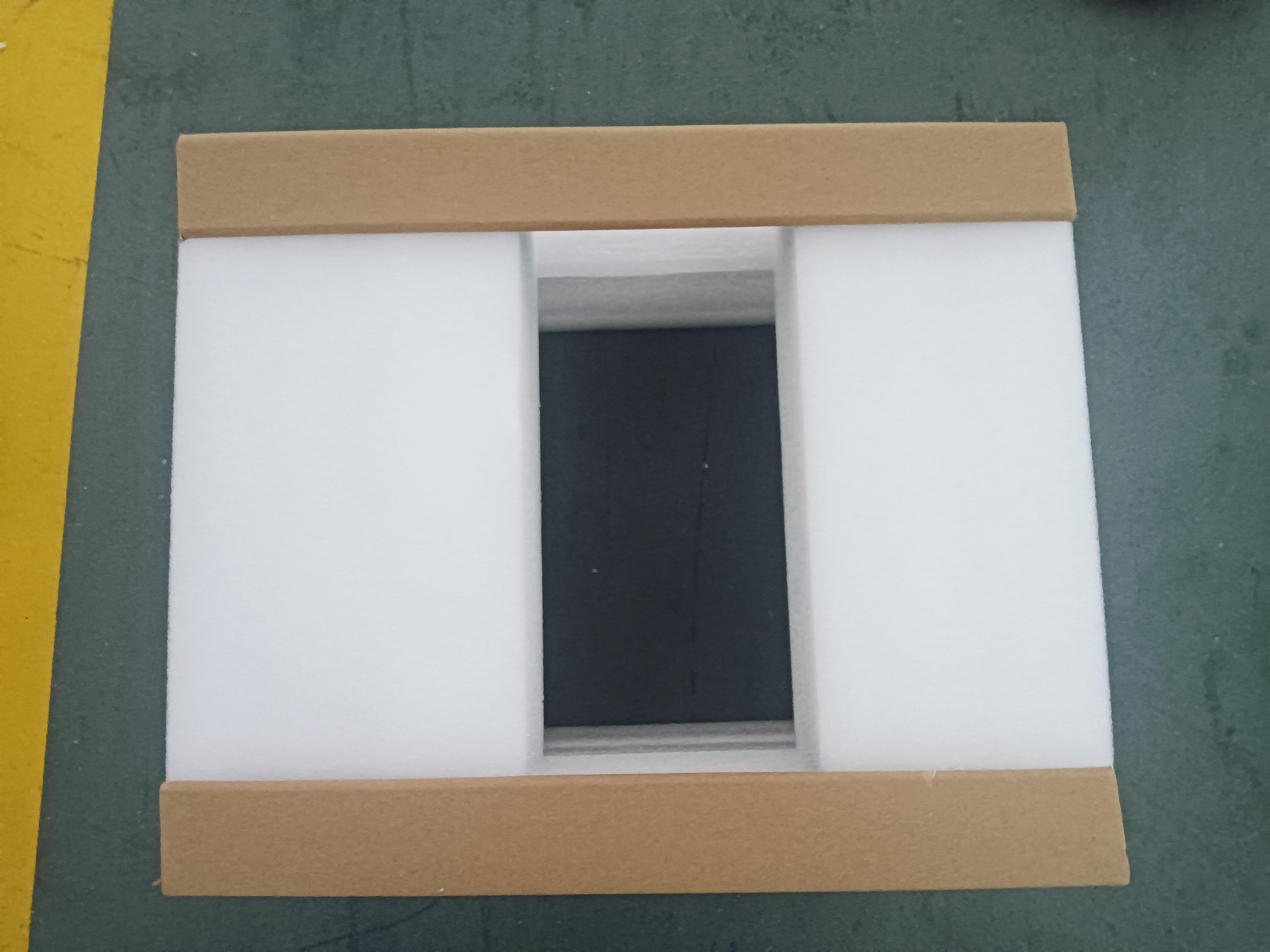
What white foam board frames are, and where they fit
A white foam board frame is a sheet of white foam — typically a foam core laminated or faced to present a clean white surface — cut with one or more openings so that a product sits inside the opening rather than on top of the sheet. The frame holds position, separates parts, and presents the product when the package is opened. It is a packaging component, not a structural material, so its job is fit, protection, and presentation within a defined box or tray.
Buyers usually arrive at this category from one of three directions: they need a cleaner-looking presentation layer above a tray, they need repeated openings to hold several identical parts, or they need a frame that registers against another foam component. The reference product Die-Cut Foam Gasket Frames describes die-cut foam frames with repeated openings for protective packaging layouts, which is the closest supplied example of the frame format. The same die-cut family also includes Die-Cut White Foam Trays, where formed cavities arrange items, and Blue Layered Foam Strips, which cushion and separate within an assembly. Frames, trays, and strips are often combined in one pack, so specify them together rather than as isolated parts.
Frame formats and when each one fits
The first decision is not material — it is what the frame must do. A frame that only presents a product can be thinner and simpler than one that also locates it during transit. Use the table below to match the format to the job, then confirm dimensions against the actual product and box.
| Frame format | Primary job | Fits when | Watch for |
|---|---|---|---|
| Single-opening presentation frame | Holds one product and gives a clean white border | Retail or unboxing presentation matters; product is already supported below | Opening too tight causes scuffing; too loose lets the product shift |
| Multi-opening frame (repeated openings) | Holds several identical or similar parts in fixed positions | Kits, sets, or multiple components ship together | Web width between openings must stay strong enough to resist tearing |
| Frame combined with a die-cut tray | Locates parts in cavities and adds a presentation or retention layer | Parts need both positioning and a finished top surface | Stack height and registration between frame and tray must be agreed |
| Frame used with layered foam strips | Cushions edges and separates parts within the frame | Fragile or mixed-weight components share one pack | Strip thickness and placement affect how the frame seats |
Specification decisions that determine whether the frame works
Most frame failures trace back to a specification that was never written down. The supplied product evidence for the die-cut foam family states that shape and dimensions are confirmed for each order, the packaging layout is reviewed against the requested component arrangement, and material and layout choices are confirmed against order requirements. That is the correct sequence: define the arrangement first, then the material and dimensions. The checklist below turns that sequence into questions a buyer can put in writing.
- Product envelope: length, width, height, and any protrusions, plus the tolerance you can accept around the opening.
- Opening count and spacing: how many openings, their positions, and the minimum web width between them.
- Frame thickness: driven by whether the frame only presents or also retains the product.
- Registration: how the frame aligns with the tray, box, or other foam layer beneath it.
- Surface and color: white face on one or both sides, and whether cut edges will be visible to the end user.
- Assembly: whether the frame is supplied loose, adhered to another layer, or part of a multi-layer stack.
- Inspection basis: which dimensions and appearance points are checked before shipment, and against what drawing.
Write the tolerance for the opening, not just the nominal size. A frame that fits a sample by hand may still fail in production if the opening tolerance is wider than the product tolerance. Ask for the agreed drawing to show both.
Material and construction trade-offs
White foam board is chosen for appearance and consistent thickness more often than for heavy cushioning. The trade-off is straightforward: a clean white face improves presentation, but the frame still has to survive handling, compression in the box, and the product's own weight during transit. Where the frame must absorb impact rather than present, a tray or layered strip arrangement is usually the better primary component, with the frame as the top layer.
Two construction details deserve attention. First, cut quality: die-cut openings should have clean edges, because ragged edges on a white face are immediately visible to the end user. Second, layer bonding: if the frame is built from more than one foam layer, ask how the layers are joined and whether the joint survives the expected handling. The supplied evidence does not specify foam chemistry, density, or bonding method, so treat those as questions for the supplier rather than assumptions.
Questions to ask a foam frame supplier
Good suppliers answer specification questions with specifics and are comfortable saying what they need from you. Vague answers on dimensions or inspection are a warning sign. Use these questions during evaluation:
- Can you review our component arrangement and propose a frame layout before quoting?
- Which dimensions will be confirmed per order, and will we receive a drawing for approval?
- What is the opening tolerance, and how is it measured?
- How do you handle multi-opening layouts where web width is tight?
- What does your pre-shipment inspection cover, and against which confirmed specification?
- Can the frame be supplied together with trays or foam strips as one coordinated set?
- What information do you need from us to confirm material and layout choices?
The supplied advantages for the die-cut foam family — product-specific cutout and positioning review, material and layout choices confirmed against order requirements, and pre-shipment inspection aligned with the confirmed order specification — describe the process to verify. Ask the supplier to show how each step is documented for your order.
Sample and first-order validation
A sample is only useful if it tests the real conditions. Approve the drawing first, then test the physical sample against the product and the actual box. A practical validation sequence:
- Drawing check: confirm opening size, position, frame thickness, and registration features against your product drawing.
- Fit check: insert and remove the product several times; note scuffing, looseness, or force required.
- Assembly check: seat the frame with the tray, strips, or box it will ship with, and confirm stack height.
- Handling check: simulate the pick-and-place and unboxing sequence your customer or line operator will use.
- Transit check: where feasible, run a packaged sample through your normal distribution route or an agreed test protocol.
- Inspection agreement: record which dimensions and appearance points will be checked before shipment, so the first production lot is judged against the same basis as the sample.
Keep the approved sample and the signed drawing together. They are the reference for any dispute about fit or appearance later.
Warning signs during supplier evaluation
- Quotes issued without reviewing the component arrangement or asking for a product drawing.
- No stated opening tolerance, or tolerance described only as "standard".
- Unwillingness to provide a pre-shipment inspection basis in writing.
- Frame, tray, and strip quoted as unrelated items with no registration discussion.
- Appearance claims about the white surface that are not tied to a sample you can inspect.
None of these is automatically disqualifying, but each one shifts risk onto you. Ask for the missing document rather than accepting a verbal assurance.
Next step: build the frame specification before requesting quotes
Assemble a one-page specification: product envelope with tolerances, opening count and positions, frame thickness, registration method, surface requirement, assembly method, and inspection basis. Send it with the component arrangement and the box or tray drawing. Suppliers who can work from that document will quote more accurately, and you will be comparing like with like. Where frames, die-cut trays, and foam strips ship together, specify them as one set so registration and stack height are confirmed once, not three times.
Project discussion