
Yiruida news
The Sustainability Shift in Protective Foam Packaging: What B2B Buyers Need to Know
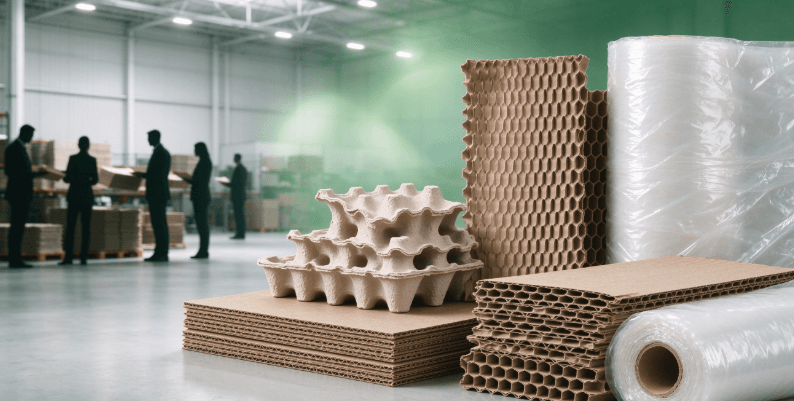
I've watched the sustainability conversation in packaging evolve from a marketing talking point to a procurement requirement. And nowhere is that shift more visible than in protective foam.
Five years ago, a buyer could specify expanded polystyrene, get a good price, and nobody asked questions. Today, that same specification triggers a cascade of regulatory concerns, retailer mandates, and consumer backlash that can undermine an entire brand. The European Union's Packaging and Packaging Waste Regulation is setting binding recyclability grades for all packaging from January 1, 2030, and mandating minimum recycled content of 35% in plastic packaging by the same date. That's not a distant future. That's the next procurement cycle for many manufacturers.
The recyclable protective foam packaging market was valued at USD 3.4 billion in 2026 and is projected to reach USD 6.6 billion by 2034, growing at an 8.6% CAGR—significantly faster than the overall foam packaging market. That growth reflects a fundamental shift in what buyers are willing to accept.
Why Traditional Foam Is Under Pressure
Expanded polystyrene (EPS) has been the default protective foam for decades. It's cheap, lightweight, and it works. But it doesn't recycle economically. The low density that makes it effective as a cushioning material also makes it expensive to collect, transport, and process. Most municipal recycling programs won't accept it.
The regulatory pressure is mounting from multiple directions. Extended producer responsibility schemes are shifting the cost of end-of-life management onto the brands that put packaging into the market. Retailer mandates—Amazon, IKEA, and others—are requiring recyclable or reusable packaging from their suppliers. And consumer sentiment is increasingly hostile to plastic packaging that can't be easily recycled.
For B2B buyers, the question is no longer whether to transition away from traditional foams. It's how quickly they can do it without compromising protection performance.
The Options That Are Actually Available Now
The sustainable foam landscape is more mature than most buyers realize. There are several viable pathways, each with different performance characteristics and cost implications.
Recycled-Content Polyethylene Foam
This is the most direct replacement for traditional EPE. Sealed Air launched a fully recyclable polyethylene foam cushioning line in May 2026, manufactured with 50% post-industrial recycled content for e-commerce protective packaging applications. The performance is essentially identical to virgin polyethylene foam. The recycled content reduces the carbon footprint without changing the material's behavior.
For brands that need a drop-in replacement without requalifying their entire packaging system, recycled-content PE foam is the path of least resistance. It's recyclable in LDPE streams, it performs like the material it replaces, and the cost premium is modest.
Bio-Based and Biodegradable Foams
The more ambitious alternative is bio-based foam derived from agricultural waste, plant starches, or fungal mycelium. These materials decompose naturally in composting environments without requiring specialized recycling infrastructure.
Cruz Foam is a commercially available example. It's made from 70% upcycled food waste, meets ASTM D6400 compostability standards, and fully disintegrates in eight weeks with no residue. It's ASTM D6400 tested compostable and supports healthy seed germination.
Stora Enso's Papira is a bio-based and biodegradable foam made from wood fibers sourced from sustainably managed forests. It's being used for protective inserts in appliances. Sony has transitioned from polystyrene foam to Kaneka Green Planet, a biomass-derived biodegradable biopolymer, for large TV packaging in Hong Kong and Taiwan.
Mycelium-based foams represent another pathway. Mushroom root networks are grown on agricultural waste substrates to form strong, moldable bio-foam that is 100% compostable. These materials offer competitive compressive strength compared to PU foam and biodegrade rapidly without the infrastructure requirements of plastic recycling.
Material | Feedstock | Certification | Composting Time | Best For |
Recycled-content PE | Post-industrial PE waste | Recyclable (LDPE stream) | N/A (recyclable) | Drop-in EPE replacement |
Cruz Foam | 70% upcycled food waste | ASTM D6400 | ~8 weeks | High-value, cold-chain, fragile goods |
Papira (Stora Enso) | Wood fibers | Bio-based, biodegradable | Variable | Appliance inserts, protective packaging |
Mycelium-based | Agricultural waste | Compostable | Weeks | Fragile goods, cosmetics, pharma |
The Performance Question
The most common objection I hear from procurement teams is that sustainable foams don't perform as well as traditional materials. That was true five years ago. It's not true now.
Mycelium-based foam has demonstrated compressive strength significantly higher than PU foam in controlled testing. Bio-based foams are being validated against the same drop test standards as their petroleum-based counterparts. The performance gap has closed for most applications.
What hasn't closed is the cost gap. Bio-based foams typically carry a premium over traditional EPS and EPE. But that premium needs to be evaluated against the total cost of ownership, including regulatory compliance, retailer mandates, and brand risk. A foam that costs 20% more per unit but keeps a retailer relationship intact is not more expensive. It's cheaper.
A Real Case Study: From EPS to Mycelium in Cold Chain
A seafood producer in Western Australia was using expanded polystyrene boxes for shipping fresh fish. The boxes were effective—lightweight, insulating, and cheap. But they were generating a waste stream that the company's retail customers were increasingly unwilling to accept.
The company partnered with researchers to develop a biofoam box made from wheat straw, a common agricultural by-product. The boxes are lightweight, hydrophobic, able to retain ice and water, and suitable for home composting.
The performance matched the EPS boxes for cold chain requirements. The cost was higher per unit, but the company gained access to retail channels that had previously been closed to them because of packaging waste concerns. The premium paid for itself in market access.
That's the equation that matters. Sustainability isn't a cost center. It's a market access requirement. Brands that can't meet it lose business.
What B2B Buyers Should Be Asking Suppliers
The sustainable foam market is growing fast, and not every supplier claiming to offer "eco-friendly" foam can actually deliver. Here's what to verify.
Ask for the certification. ASTM D6400 is the standard specification for compostable plastics. EN 13432 is the European equivalent. If a supplier claims biodegradability or compostability without a certification from a recognized body, the claim is unverified. Cruz Foam's ASTM D6400 certification, for example, is a specific, testable standard.
Ask for the feedstock source. Recycled content is only as good as the waste stream it comes from. Post-industrial recycled content is cleaner and more consistent than post-consumer. Bio-based content should specify the agricultural source—wood fiber, food waste, wheat straw, etc.
Ask about end-of-life infrastructure. A compostable foam is only compostable if there's a composting facility that will accept it. In some markets, industrial composting infrastructure is available. In others, home composting is the realistic pathway. Understand where your customers are and what happens to the packaging after they're done with it.
And ask for performance data. Sustainable foams are not all equivalent. Drop test results, compression strength, and moisture resistance vary significantly between materials. A supplier who can't provide performance data for their specific product is a supplier who doesn't understand what they're selling.
The Regulatory Horizon
The regulatory pressure on packaging is only going to increase. The EU's PPWR sets binding recyclability grades for all packaging from 2030 and mandates 35% recycled content in plastic packaging by the same date. Other jurisdictions are following. Canada, Australia, and several U.S. states have enacted or are considering similar measures.
For B2B buyers, the strategic implication is clear. Packaging specifications that rely on non-recyclable foams are a regulatory liability. They may work today. They will not work in 2030. Transitioning now, while there's still time to validate performance and qualify suppliers, is far less disruptive than being forced to transition under a compliance deadline.
Frequently Asked Questions
Is biodegradable foam as protective as traditional foam?
For most applications, yes. Mycelium-based foams have demonstrated compressive strength comparable to or exceeding PU foam. Bio-based foams are being validated against the same ISTA and ASTM drop test standards as petroleum-based materials. The performance gap has closed for most use cases.
What does ASTM D6400 certification actually mean?
ASTM D6400 is the standard specification for labeling of plastics designed to be aerobically composted in municipal or industrial facilities. It requires the material to biodegrade at a rate consistent with other known compostable materials and to disintegrate completely, leaving no visible residue.
Can compostable foam be recycled?
Compostable foam is designed for composting, not recycling. It shouldn't be placed in a recycling stream because it can contaminate the recycling process. The correct end-of-life pathway is industrial or home composting, depending on the certification.
How much more does sustainable foam cost?
The premium varies by material and volume. Recycled-content PE foam carries a modest premium over virgin material—often 5% to 15%. Bio-based and compostable foams can carry a 20% to 50% premium depending on the feedstock and production scale. As production volumes increase, these premiums are declining.
What should I do if my current supplier doesn't offer sustainable foam options?
Ask them directly. Many established foam manufacturers have launched or are developing sustainable product lines. If your current supplier doesn't have an answer, it's worth evaluating whether they're the right long-term partner for a market where sustainability is becoming a baseline requirement.
The Bottom Line
The sustainability shift in protective foam packaging isn't a trend. It's a structural change in what the market will accept. Regulatory mandates, retailer requirements, and consumer expectations are all moving in the same direction. The foam that worked five years ago may not work five years from now.
The good news is that viable alternatives exist. Recycled-content PE foam offers a drop-in replacement. Bio-based and compostable foams offer genuine end-of-life solutions. The performance is there. The supply chain is maturing. The cost premium is shrinking.
The strategic move for B2B buyers is to start validating sustainable foam options now, before compliance deadlines force the transition. Qualify suppliers. Run drop tests. Understand the end-of-life pathways in your target markets. And build sustainability into your packaging specification as a functional requirement, not an optional upgrade.
Project discussion