
Yiruida news
Die-Cut White Foam Trays: What's Changing in Protective Packaging Sourcing
A market-insight view of die-cut white foam trays for B2B buyers: how component miniaturization, automation, and packaging consolidation are reshaping tray specifications and supplier evaluation.
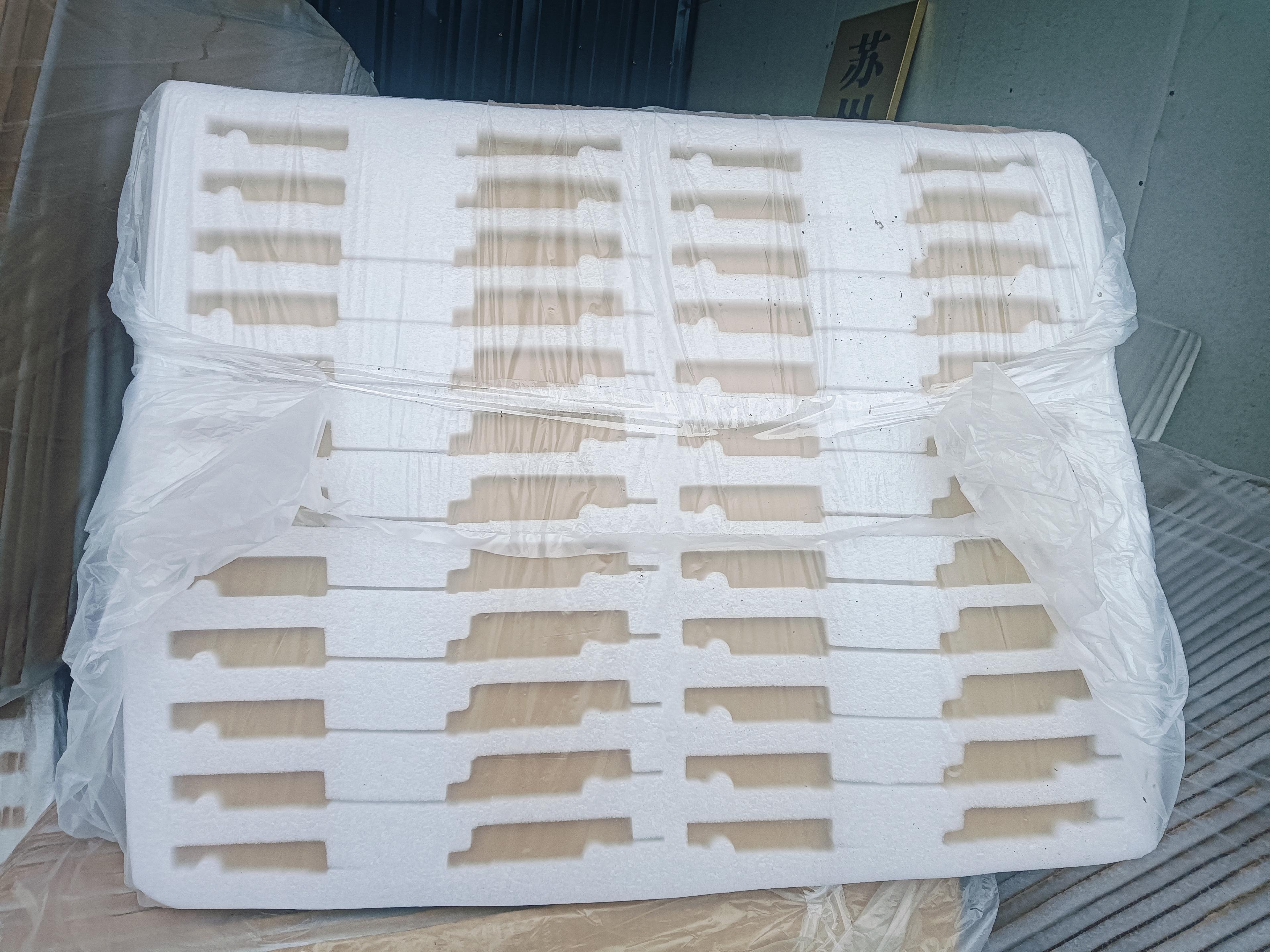
Why die-cut white foam trays are being re-specified, not just re-ordered
Die-cut white foam trays are packaging components with formed cavities cut into a foam sheet so that parts sit in fixed positions during handling, shipping, and presentation. They belong to the broader die-cut foam packaging family, alongside foam insert panels and foam gasket frames. For buyers in electronics and automotive supply chains, the tray is rarely the most expensive line item — but it is often the one that determines whether a part arrives undamaged and whether a line operator can pick it without hesitation.
What has changed is not the basic idea. It is the specification pressure around it. Smaller components, more automated handling, and tighter packaging consolidation targets are pushing buyers to revisit cavity geometry, foam grade, and supplier verification rather than simply repeating last year's purchase order. This article maps the trends that matter and turns each into a decision you can act on.
Trend 1: Component miniaturization is tightening cavity tolerances
As electronic assemblies and automotive sub-components shrink, the ratio between part size and cavity clearance becomes less forgiving. A cavity that was acceptable for a larger part can allow a small connector or sensor to rotate, nest into a neighbor's pocket, or sit below the pick plane.
What this means for tray design
- Cavity-to-part clearance should be reviewed per component, not applied as a blanket rule across the tray. Loose clearance speeds loading but increases movement in transit.
- Pick access matters as much as fit. If operators or automated grippers need to lift the part, the cavity depth and surrounding foam land must leave enough exposed surface.
- Orientation features — a shaped pocket, a lead-in chamfer, or an asymmetric cut — help prevent reversed loading without adding labels.
The practical implication: request a layout review against the actual component arrangement before approving a die. The supplied product evidence for die-cut white foam trays notes that packaging layout is reviewed against the requested component arrangement and that shape and dimensions are confirmed for each order. That order-specific confirmation step is where miniaturization risk is caught.
Trend 2: Packaging consolidation is pushing trays to do more than one job
Buyers are under pressure to reduce the number of packaging SKUs they manage. One visible response is multi-function tray design: a single die-cut white foam tray that holds several related components in a defined sequence, replacing separate bags or loose foam pieces.
Trade-offs to weigh
| Approach | What it gains | What it costs |
|---|---|---|
| Single-part tray | Simple die, easy change control, clear ownership per SKU | More SKUs, more handling steps |
| Multi-cavity tray | Fewer SKUs, one pick action, kitting built into the layout | Larger die cost, a single change affects the whole kit |
| Tray plus foam strips | Extra cushioning or separation where the tray alone is insufficient | Additional assembly step and component count |
Layered foam strips are a common companion component when a tray needs extra cushioning or separation between rows. The decision rule is straightforward: consolidate only when the components share a stable demand pattern. If one part in a multi-cavity tray is revised frequently, the die and the layout review may need to be repeated more often than the consolidation saves.
Trend 3: White foam is being chosen for inspection and presentation, not only protection
White foam trays make contamination, debris, and part damage easier to see than darker foams. In electronics and automotive component packaging, that visual contrast supports incoming inspection and clean presentation. The trade-off is that white surfaces also show handling marks, so buyers should confirm expectations for appearance and cleanliness in the order specification rather than assuming a cosmetic standard.
Color is also a functional signal. Blue foam is often used in layered foam strips and related components to distinguish cushioning pieces from the white tray in an assembly. If your packaging uses both, define which color carries which role so that operators do not substitute one for the other.
Trend 4: Supplier verification is moving from sample approval to specification control
A first-article sample proves that a tray can be made. It does not prove that the tenth order will match. The more durable sourcing practice is to anchor approval in a written specification: material, sheet thickness, cavity dimensions, tolerance, and the inspection criteria used before shipment.
Questions that separate a controlled supplier from a responsive one
- Which dimensions on the drawing are critical, and how are they checked?
- What happens when a component revision changes the cavity — is the die re-cut, modified, or the layout re-reviewed?
- Is pre-shipment inspection tied to the confirmed order specification, and what does the record include?
- Can the supplier explain why a given foam grade and layout was selected for your part, rather than only quoting a price?
The supplied product evidence states that material and layout choices are confirmed against order requirements and that pre-shipment inspection is aligned with the confirmed order specification. Those are the two checkpoints to write into your purchase terms.
Trend 5: Die-cut foam is being evaluated as a system, not a part number
Trays, insert panels, gasket frames, and foam strips are increasingly specified together because they interact. A tray that holds a part securely may still need a foam frame above it to stop vertical movement, or strips below it to absorb shock. Treating these as one packaging system clarifies who owns the fit problem.
A practical evaluation sequence
- Define the handling path — manual pick, automated pick, or both — before drawing cavities.
- Map the component arrangement and confirm which parts must be separated, cushioned, or presented in sequence.
- Select the foam family (tray, frame, strip) for each function, then check that the layers do not fight each other.
- Confirm dimensions and tolerances on the approved layout, not on a verbal description.
- Agree the inspection criteria and keep them attached to the order.
What to watch in the next sourcing cycle
Two qualitative shifts are worth tracking. First, buyers are asking for more documentation of what was agreed, because packaging failures are expensive to trace after the fact. Second, packaging layouts are being reviewed earlier in the product development cycle, when a cavity change is still cheap. Neither trend depends on a specific regulation or market forecast; both follow from the cost of late discovery.
For die-cut white foam trays specifically, the buyer's leverage lies in the specification conversation. A tray is a simple object, but the decisions behind it — clearance, depth, foam grade, layer interaction, and inspection criteria — are where cost and risk actually sit. Bring those decisions into the open before the die is cut.
Project discussion